The Engineering Marvel: Inside a Superconducting Linear Accelerator

A superconducting linear accelerator is the engine at the heart of a modern free-electron laser facility. It accelerates tightly controlled electron bunches to high energy, then sends them through devices that convert their motion into intense, short-wavelength light for experiments.
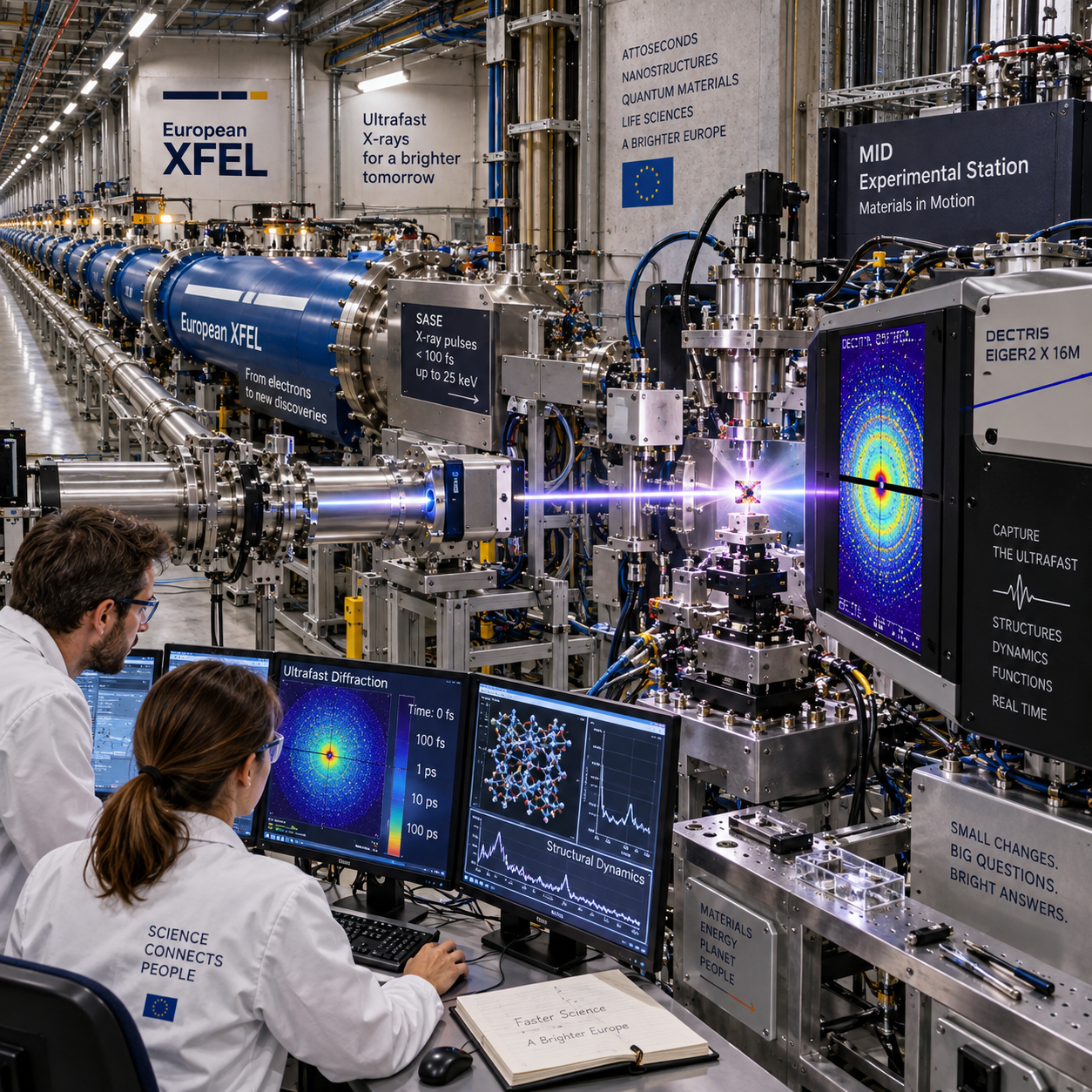
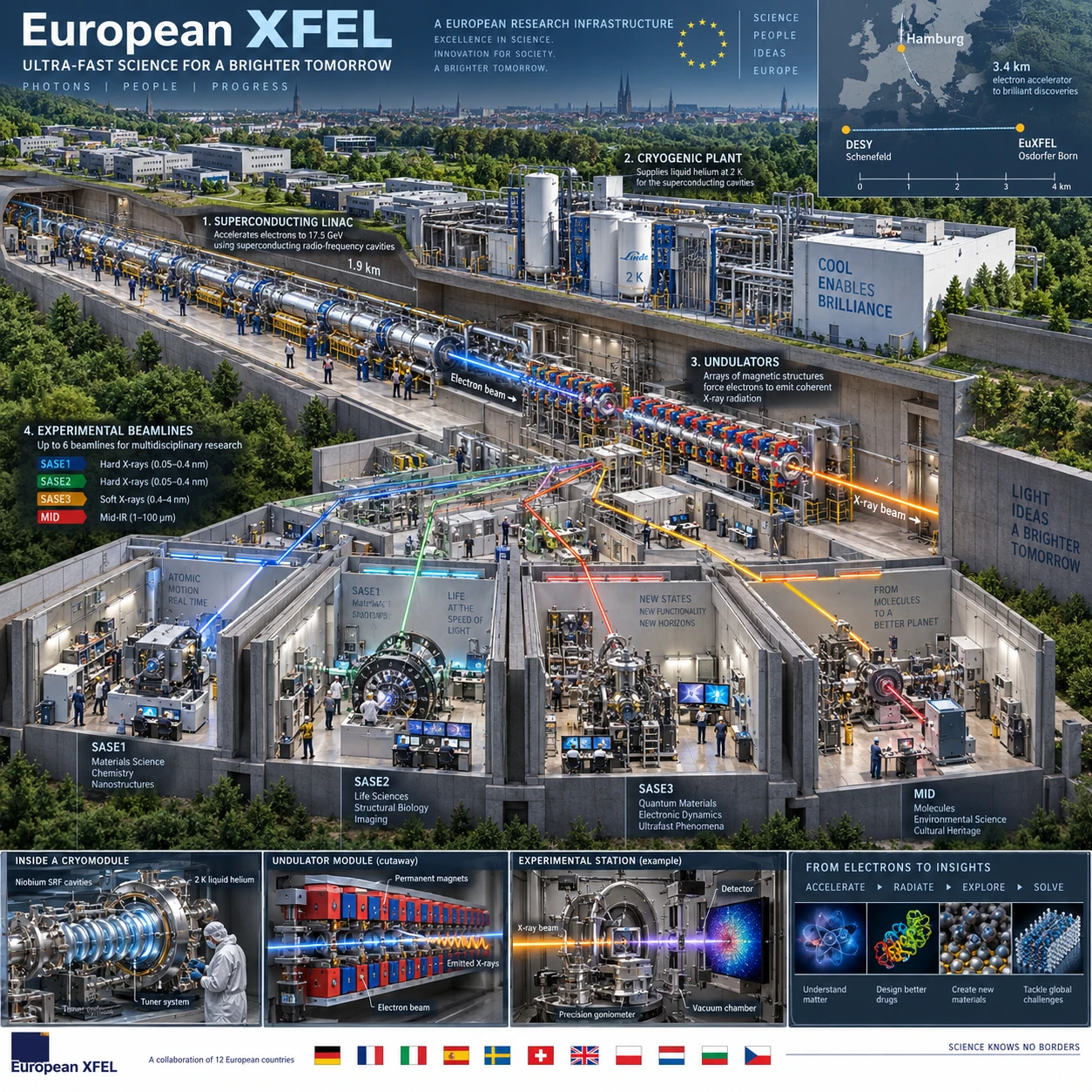
At European XFEL in Germany, this process depends on far more than an accelerator alone. Superconducting radio-frequency cavities, cryogenics, beam diagnostics, controls, undulators, and photon beamlines must work together as one research infrastructure system.
Why a free-electron laser needs a linear accelerator
A free-electron laser needs a high-energy, precisely shaped particle beam to generate its light. The linear accelerator supplies that beam, preparing electrons for the undulators where X-ray radiation is produced.
Unlike a laser that uses transitions in atoms or molecules, an FEL uses electrons moving through a magnetic structure. The accelerator first creates and accelerates the electrons; the undulators then make them emit light. The quality of the final photon beam depends on the energy, timing, and consistency of the incoming electron bunches.
European XFEL is an example of this facility-scale approach. Its superconducting linac provides the energetic electron beam for experiments served by multiple photon beamlines. Each beamline can deliver light to a different experimental station, where researchers investigate materials, chemical processes, and biological samples. The accelerator does not produce a result by itself; it enables experiments by providing a controlled source of X-ray pulses.
That distinction matters: an FEL is a linked chain, not a standalone light source. A disturbance in the electron beam can affect the light downstream, so accelerator operation and experimental requirements are closely connected.
How the accelerator moves electrons forward
A linac accelerates electrons in a straight path using timed radio-frequency fields. It groups the particles into electron bunches and gives each bunch repeated energy increases as it passes through successive accelerating structures.
Electrons begin at an injector, where an electron source releases particles and early accelerator components form them into bunches. A bunch is a compact packet of electrons rather than a continuous stream. Radio-frequency (RF) power drives electromagnetic fields inside the cavities; when a bunch reaches a cavity at the right phase, the field pushes it forward and increases its energy.
The accelerator repeats this process across many cavities. Their fields must be synchronized with the arrival of the bunches, much like a series of timed pushes. The timing is set and monitored by control systems, while diagnostic instruments measure properties such as beam position, charge, and energy.
Acceleration is only part of the job. Magnets guide and focus the particle beam, and operators tune the machine to keep bunches compact and stable. A beam that has enough energy but poor timing or excessive spread may not produce the desired FEL output.
The role of superconducting cavities
Superconducting radio-frequency cavities create strong accelerating fields while allowing electrical current to flow with very low resistance. Their low losses make them well suited to delivering energy to electron bunches repeatedly along a long linac.
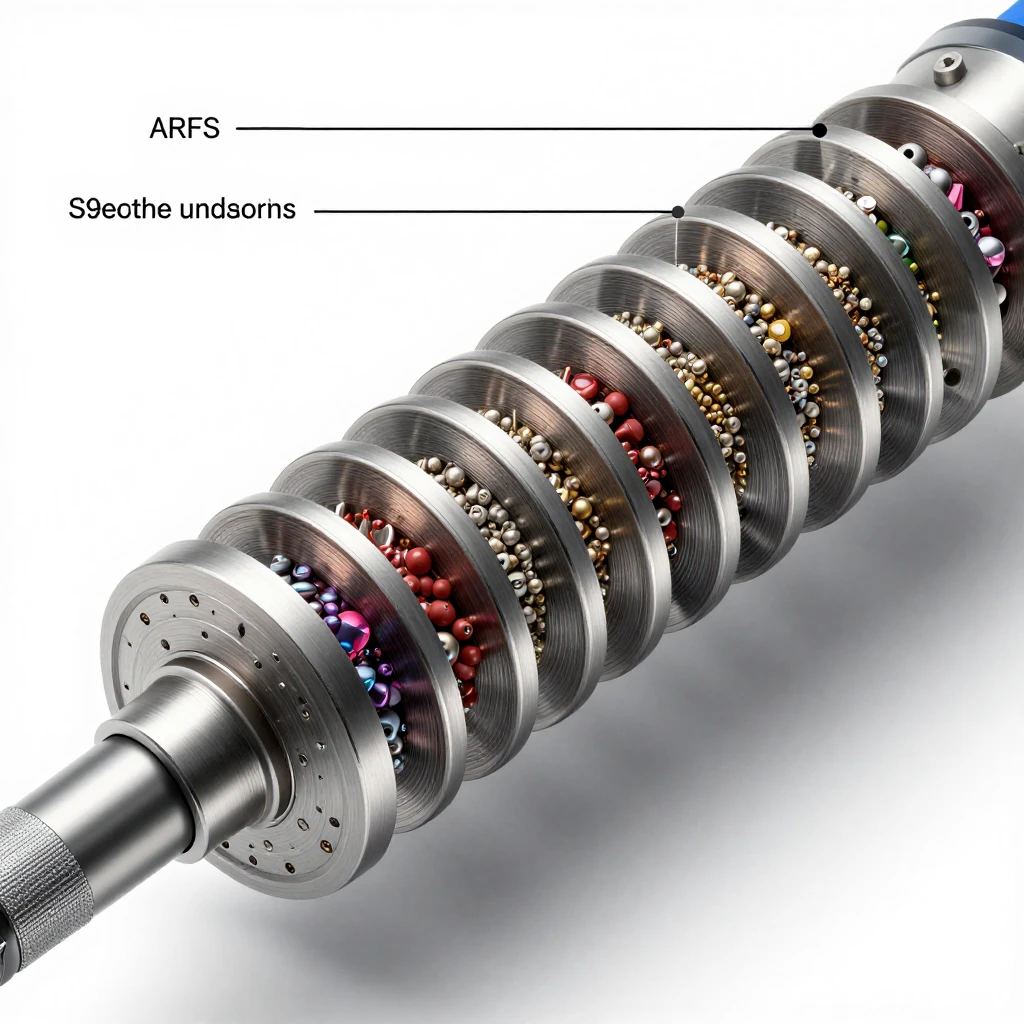
An SRF cavity is a resonant metal structure, commonly made with niobium, in which RF power establishes an oscillating electric field. The cavity’s shape and operating frequency help form that field, and its timing must match the passage of the electron bunches. A chain of cavities adds energy in stages, building the beam’s energy over the accelerator’s length.
Superconductivity reduces resistive heating in the cavity walls, but it does not eliminate energy use or operating complexity. The cavities must be cooled to cryogenic temperatures, RF systems must maintain the fields, and controls must keep the phase and amplitude within tight operating limits. This exchange is central to the design: lower electrical resistance comes with demanding refrigeration and control requirements.
SRF technology also supports flexible operation. Facility teams can adjust accelerator settings to meet different photon-beam requirements, within the machine’s operating envelope. Those adjustments still require careful coordination, because a change that improves one beam parameter may affect another.
Keeping the system cold and stable
The cryogenic system cools superconducting cavities enough for them to enter the superconducting state and sustain their fields efficiently. Vacuum systems, sensors, and controls then help keep the accelerator stable and protect its operating conditions.
At very low temperatures, niobium cavities lose much of their electrical resistance. A cryogenic plant circulates and manages the cooling medium, while insulation limits unwanted heat flow from the surrounding environment. Cooling is a continuous infrastructure task, not a one-time preparation: heat leaks, RF losses, and equipment loads all affect the refrigeration demand.
Vacuum is equally important. Electrons travel through evacuated beam pipes so they do not collide frequently with gas molecules, which could scatter particles or degrade the beam. Vacuum equipment must maintain suitable conditions over long sections of the accelerator and through connected components.
Controls tie these systems together. Sensors report temperature, pressure, RF field, and beam conditions; operators use that information to identify drift and respond before it disrupts a run. The practical test is stability over time: a cavity that reaches the right temperature once is not enough if its field or the beam’s timing wanders during experiments.
From particle beam to X-ray light
After acceleration, the electron beam passes through undulators, where alternating magnetic fields make the electrons follow a slight zigzag path and emit radiation. In an FEL, the interaction between the electrons and their radiation can organize the bunch into structures that amplify the emitted light.
An undulator contains a sequence of magnets with alternating polarity. As the energetic particle beam travels through it, electrons oscillate and radiate. Under suitable conditions, this radiation interacts with the bunch and grows into a powerful, coherent pulse. The process depends on beam energy and quality, as well as precise alignment and magnetic settings.
The resulting photon beam is transported through optical systems to experimental photon beamlines. These routes distribute the X-rays to instruments designed for particular measurements. Researchers may use the pulses to probe how matter is structured or how it changes, but the facility does not guarantee a discovery: outcomes depend on the question, sample, experimental design, and data analysis.
Engineering challenges at facility scale
A large superconducting linac must keep the electron beam aligned, synchronized, and consistent while many interconnected systems operate at once. Small errors can accumulate along the accelerator and affect the light delivered to experiments.
Alignment teams position cavities, magnets, and beam pipes so the beam follows its intended route. Beam diagnostics measure whether particles are centered and whether their energy and timing remain within operational targets. If the beam shifts, steering magnets can correct its path, but corrections must be made with care to avoid creating problems farther downstream.
Synchronization is another demanding task. RF fields, electron bunches, undulators, and experimental timing systems must work to a shared schedule. The facility’s controls and diagnostic network help operators track these relationships, while maintenance planning protects access to equipment that is difficult to reach during operation.
Common misconceptions can obscure the real engineering:
- Thinking superconductivity means zero operating cost: low cavity resistance still requires substantial cryogenic infrastructure, RF power, and expert operations.
- Treating the linac as the whole FEL: the injector, beam transport, undulators, photon optics, and experiment stations all contribute to the final capability.
- Assuming higher energy alone guarantees better light: beam quality, timing, magnetic settings, and stability also shape the usable photon output.
The right way to assess the machine is as a coordinated chain: every component has its own limits, and performance depends on how well those limits are managed together.
What the accelerator makes possible for research
A superconducting accelerator makes high-energy electron bunches available to an FEL, which can provide X-ray pulses for experiments across several photon beamlines. This gives researchers a tool for probing matter at small scales and studying changes that are difficult to capture with slower methods.
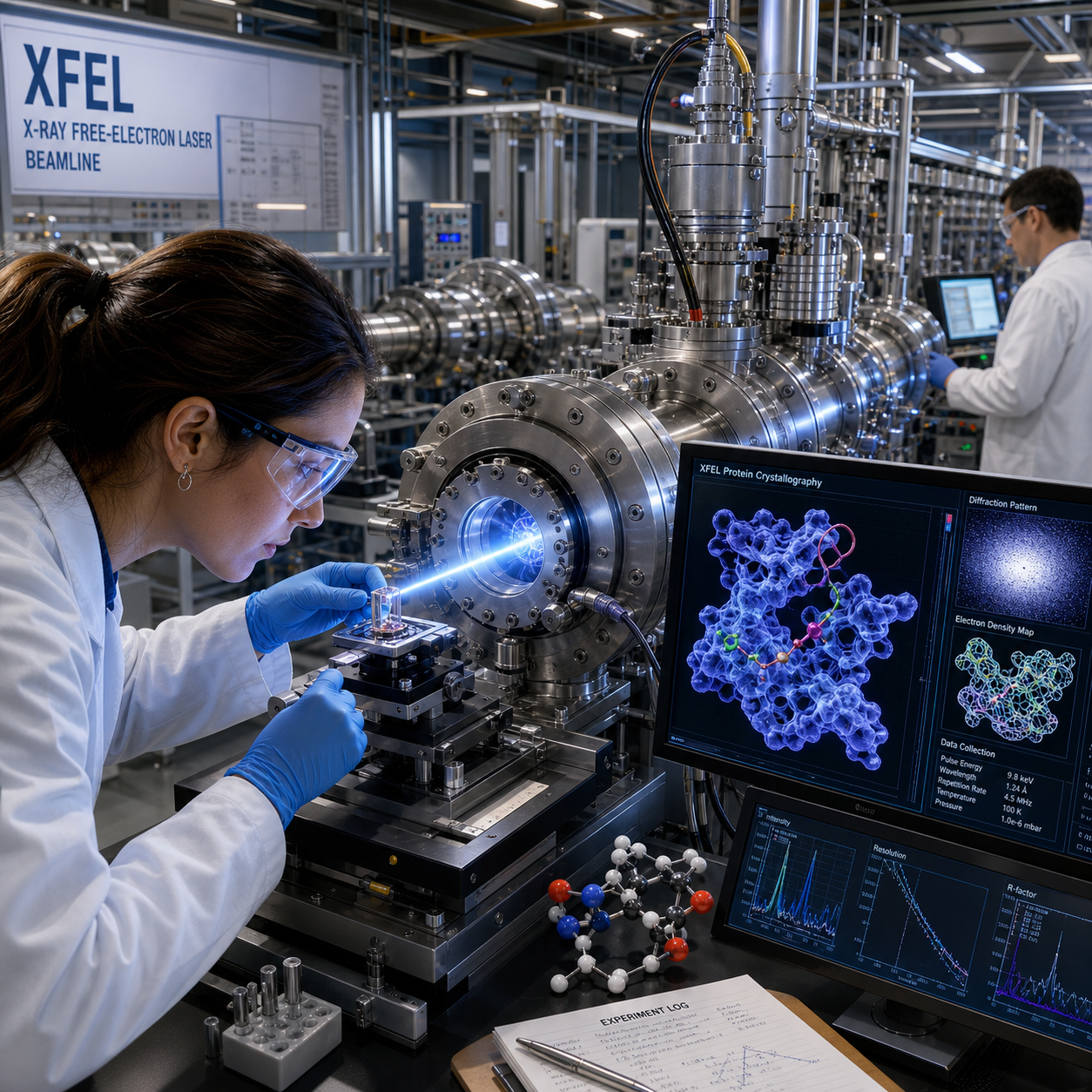
Depending on the beamline and experimental setup, scientists can investigate the structure and behavior of materials, chemical systems, or biological samples. The short pulses and X-ray wavelengths are useful for measurements where timing or fine structural detail matters. Each experiment, however, needs a suitable sample, instrument, and analysis strategy; accelerator capability alone does not determine what can be learned.
European XFEL illustrates why these facilities are described as research infrastructure. The superconducting linac supplies the particle beam, but its value reaches researchers through the complete system: stable accelerator operation, undulator radiation, photon transport, experimental stations, and coordinated support. That integration is the engineering achievement behind the science.
Frequently asked questions
What does “superconducting” mean in a linear accelerator?
It means the accelerator’s radio-frequency cavities use a material in a superconducting state, with very low electrical resistance, to sustain accelerating fields with reduced resistive losses.
Why does an SRF accelerator need to be cold?
SRF cavities must be cooled to cryogenic temperatures so their niobium can become superconducting. The cooling system maintains that state while managing heat entering the cavities during operation.
How does an electron beam produce free-electron laser light?
The accelerator sends energetic electron bunches through undulators. Their motion through alternating magnetic fields produces radiation, which can build into an intense FEL pulse when the beam and operating conditions are suitable.
How is a superconducting linac different from a circular accelerator?
A linac accelerates particles along a straight path, passing them through accelerating structures in sequence. A circular accelerator sends particles around a ring for repeated passes; a free-electron laser linac instead delivers the beam toward undulators and photon beamlines.